



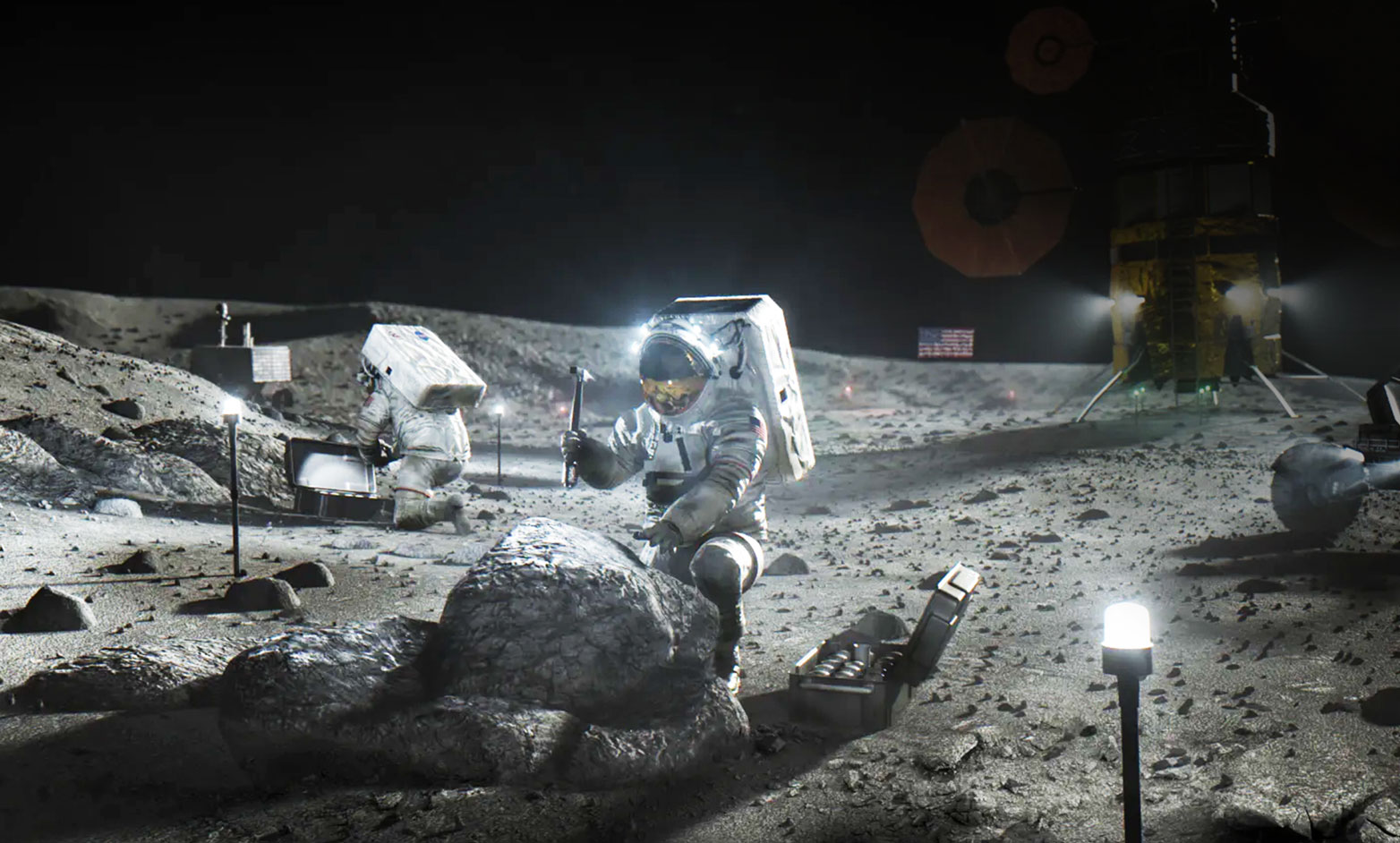
The race to establish a permanent outpost on the Moon is accelerating. NASA recently announced a multi-phase plan to ramp up lunar deliveries, test cargo and crew landers, and develop a base near the Moon’s South Pole. To achieve its ambitious goals, the Agency is collaborating with commercial industry to spark innovation, cut costs, and stimulate the growing space economy. But these exciting new partnerships also present unique challenges. Over the years, the Office of Inspector General (OIG) has provided recommendations to promote efficiency and safety as NASA’s vendors develop advanced landers to transport humans and technology to the Moon.
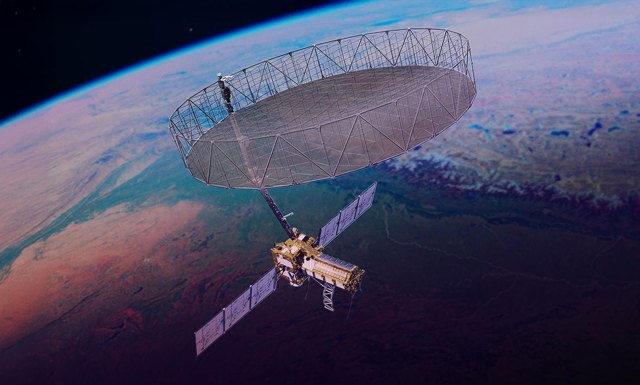
NASA began working with private companies in the 1960s. What started as a few commercial satellite launches has since burgeoned into recurring crew and resupply missions that ferry astronauts and cargo to the International Space Station. The Agency is also expanding its efforts to source commercial satellite data for Earth science initiatives and applications. Under this relatively new acquisition approach, NASA purchases services from providers who build, own, and operate space systems for research and exploration. At the same time, the Agency is also extending its commercial partnerships outside of low Earth orbit—venturing farther into space to develop a lunar economy.
In 2018, NASA established the Commercial Lunar Payload Services (CLPS) initiative, which contracts American companies to deliver science and technology to the Moon. The Agency works closely with each vendor to meet mission goals, but it has limited control over the lander designs, systems, processes, or infrastructure.
Thus far, NASA has awarded 11 task orders to five vendors, and four landers have launched. Moving forward, the Agency plans to significantly increase CLPS launch cadence, raising the current contract value and implementing a follow-on contract called CLPS 2.0.
In June 2024, the OIG reported that numerous challenges had led to a $208.2 million cost increase across CLPS missions, and an average schedule delay of at least 14 months per task order. NASA officials initially set aggressive lander delivery schedules—averaging 30 months from contract award to launch—based on overly optimistic market research studies. However, these preliminary timelines did not account for supply constraints or technological development challenges. Instead, the OIG found that the average time to launch was 44 months at the time of the report.
Auditors also determined that the use of firm-fixed-price contracts shifted production and cost risks to the CLPS vendors, which created financial pressures for these small, relatively new companies. This contributed to one CLPS vendor’s bankruptcy and continuing market uncertainty for the others.
This financial strain intensified as the scope of early CLPS missions continued to expand. NASA had originally intended to launch low-cost, non-critical instruments first before proceeding to bigger landers with more complex payloads. However, in 2020, the Agency deviated from its plans by adding the thousand-pound, $433.5 million Volatiles Investigating Polar Exploration Rover (VIPER) as the fourth CLPS task order. These high stakes led to progressively risk-averse practices that increased costs, delayed delivery schedules, and threatened CLPS’s broader objectives. VIPER was temporarily discontinued in July 2024 and then added to another CLPS task order a year later.
At the same time, NASA is also applying a firm-fixed-price contract model to its Human Landing Systems (HLS). In the coming years, these landers will be key to the Artemis campaign by carrying astronauts to the Moon’s surface and allowing them to temporarily live and work there. The Agency recently announced that Artemis III will involve critical tests in low Earth orbit, including rendezvous and docking with one or both of the landers being developed by SpaceX and Blue Origin. These tests will lay the groundwork for Artemis IV, which will return humans to the lunar surface for the first time in over half a century.
Since the inception of the HLS Program in 2019, NASA has obligated nearly $7 billion to lander development and is projected to spend over $18 billion through fiscal year 2030. SpaceX and Blue Origin will design, build, and own their landers, while NASA will purchase the landing services. However, both providers utilize NASA expertise and resources, and the Agency maintains various degrees of insight into and oversight of lander development.
In March 2026, the OIG issued a report examining these HLS contracts. Auditors determined that the Agency’s acquisition approach had effectively controlled contract costs: SpaceX and Blue Origin contracts had increased by 6 percent and less than 1 percent, respectively. However, both companies have faced technical and integration hurdles that could affect costs and delivery timelines.
Although the providers are tasked with meeting mission milestones and technical requirements, NASA is ultimately responsible for ensuring crew safety. The Agency is taking proactive steps to mitigate and prevent hazards, but gaps remain in its testing posture and crew survival analyses. In addition, NASA and SpaceX disagree on whether the company is meeting the manual control requirement that allows the crew to override automated systems during descent.
The CLPS and HLS initiatives are just two facets of the complex lunar architecture required for humanity’s next giant leap. NASA is still the primary customer driving the lunar economy, and it is collaborating with its commercial partners on many critical endeavors, including next-generation spacesuits. Together, these efforts aim to establish the infrastructure needed for sustainable missions to the Moon, and ultimately crewed missions to Mars. While this new frontier brings unprecedented challenges, balancing rapid innovation with careful oversight ensures the next era of human spaceflight is both thrilling and enduring.